

Premium Steak: How to Choose Like a Chef
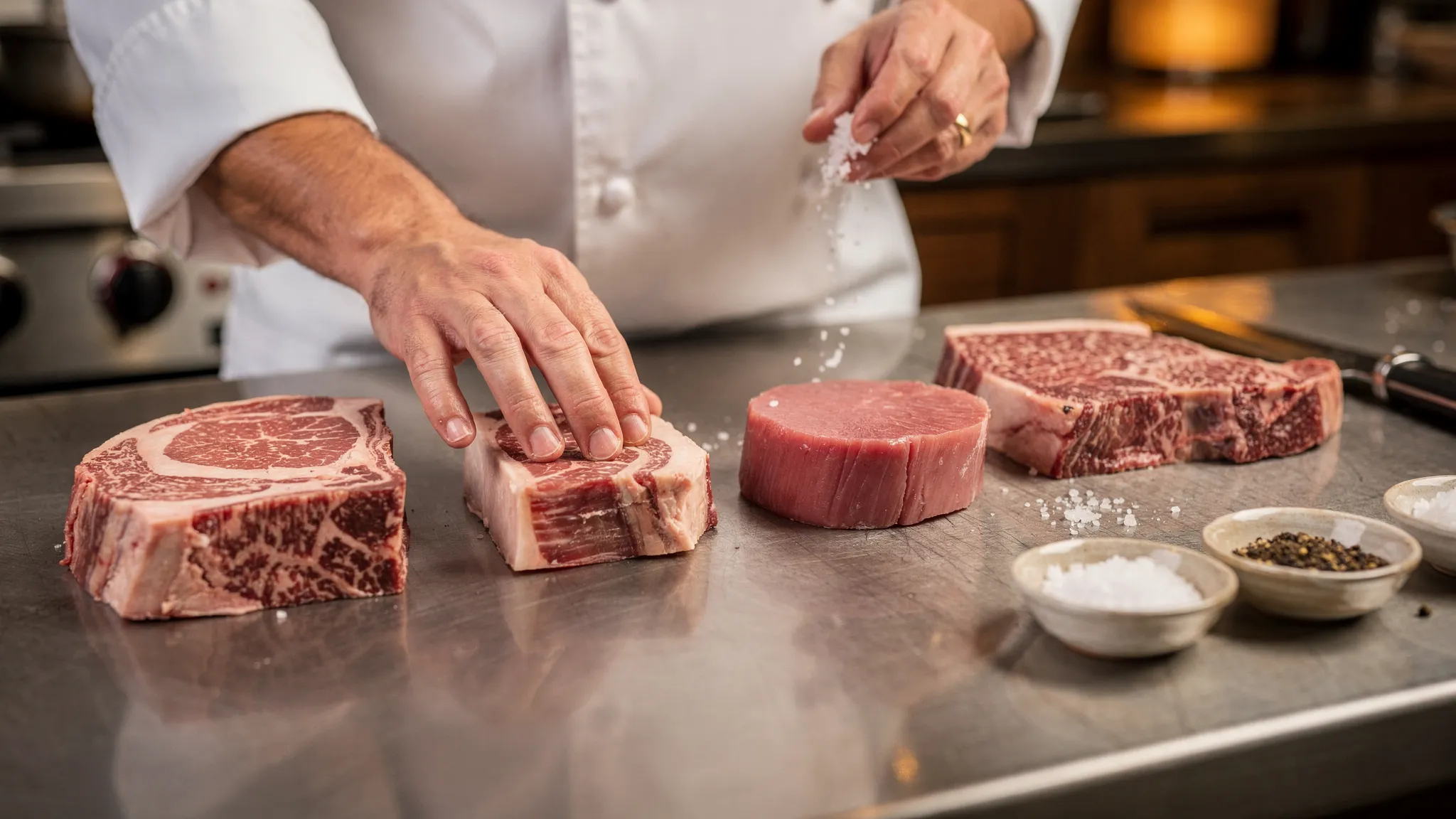
Most people think “premium steak” means “expensive steak.” Chefs think differently. In a professional kitchen, premium is about predictable tenderness, rich flavor, and consistent cooking performance. The best steaks are the ones that behave the way you expect on heat, whether you are searing in cast iron, grilling over charcoal, or slicing thin for a crowd.
This guide breaks down how chefs choose premium steak, what to look for at the butcher counter or online, and how to match the right cut to your cooking style (including what to check if you’re buying Halal Wagyu).
What makes a steak “premium” in a chef’s eyes?
A chef’s definition usually comes down to four things:
- Marbling and fat quality: Intramuscular fat (marbling) is a major driver of juiciness and flavor.
- Cut selection for the job: The “best” steak depends on whether you’re grilling, pan-searing, or slicing for serving.
- Quality signals you can verify: Grading, breed claims, aging method, and trustworthy sourcing.
- Handling from processing to your pan: Packaging, temperature control, and storage determine whether great beef arrives in great condition.
Premium steak is not one single label. It is the result of choices you can learn to spot.
Step 1: Choose the right cut for how you cook (this is chef rule #1)
Chefs start by choosing a cut that naturally fits the cooking method. If you pick the wrong cut, even top-grade beef can disappoint.
Here’s a quick cut guide that mirrors how many chefs think about menu planning.
| Cut | What’s best for | Flavor profile | Typical tenderness | Notes to know |
|---|---|---|---|---|
| Ribeye | High-heat grilling or pan-searing | Rich, buttery, beef-forward | Very tender | Marbling-heavy, forgiving on heat; great “wow” cut |
| New York strip | Grill or pan, clean slices | Beefy, balanced | Tender | Firmer than ribeye; excellent crust-to-center contrast |
| Filet (tenderloin) | Pan-sear then finish, special occasions | Mild, delicate | Extremely tender | Leaner, relies on perfect doneness and good sear |
| Picanha (top sirloin cap) | Grill, roast, skewers | Beefy, juicy | Tender if sliced right | Keep the fat cap, slice against the grain |
| Bavette (flap steak) | Quick sear, thin slicing | Deep beef flavor | Chewy-tender | Best medium-rare, must slice against the grain |
| Sirloin | Weeknight grilling | Leaner beef flavor | Medium | Great value cut, benefits from careful doneness |
If you want a deeper cut comparison in the Wagyu context, Wagyuwala also breaks down specific matchups like bavette vs. ribeye.

Step 2: Read marbling like a chef (and don’t confuse it with “fatty”)
Marbling is not the same thing as a thick outer fat cap. Marbling is intramuscular fat dispersed through the meat, and it melts as the steak cooks.
When chefs scan a steak, they look for:
- Even distribution of fine marbling, not just one heavy pocket
- White to creamy fat (color can vary with diet and age, but yellow-gray fat can be a warning sign)
- Firm texture when cold, not soft or wet
Wagyu and high-quality beef will often show more marbling, but “more” is not always “better” for every dish. For example, ultra-marbled steaks can eat richer, so you may prefer smaller portions or simpler sides.
Step 3: Understand grading and labels (so you know what you’re paying for)
USDA grades: Prime vs Choice vs Select
In the U.S., USDA quality grades are one of the most familiar signals for mainstream beef. USDA Prime generally indicates the highest marbling and is commonly used in many steakhouses.
USDA explains how grading works and what the grades mean via the USDA Agricultural Marketing Service.
Two key chef takeaways:
- Grade is not the whole story: A great butcher, a great program, and good handling can beat a random “Prime” steak that was poorly stored.
- Cut still matters: A Prime filet can still taste mild because that muscle is naturally lean and subtle.
Wagyu labels: don’t treat “Wagyu” as a single quality level
“Wagyu” is often used as a broad marketing term. There is a meaningful difference between:
- Highly marbled, carefully raised Wagyu programs
- Lower-marbling Wagyu-cross products
If you want the big-picture breakdown across origins and types, see Wagyuwala’s overview on types of Wagyu beef.
Australian Wagyu grading (what to look for)
Australian Wagyu is commonly graded with systems that reference marbling scores (often via AUS-MEAT and related programs). The practical buyer takeaway is simple: look for a clear, consistent marbling score or grading language you can verify, and buy from a seller that explains what those scores mean rather than using vague hype.
Wagyuwala goes deeper into how Wagyu quality is assessed in its post on how Wagyu quality is rated.
Step 4: Pick the right thickness (because thickness controls doneness)
If chefs could give home cooks one “premium steak” upgrade, it would be this: buy thicker steaks.
Thickness gives you a wider window to build a crust while keeping the interior at your target doneness. As a general rule:
- For pan-searing or grilling, steaks around 1.25 to 2 inches are easier to cook evenly.
- Very thin steaks can still be delicious, but they behave more like “quick sear and slice” cuts.
Also look at how the steak is cut:
- Even thickness across the steak cooks more evenly.
- A steak with a dramatic taper (one end much thinner) will overcook on the thin side.
Step 5: Ask about aging (wet-aged vs dry-aged)
Aging affects flavor and tenderness. Many premium steaks are aged, even if the seller does not shout about it.
- Wet-aging (in vacuum packaging) tends to preserve a clean beef flavor while improving tenderness.
- Dry-aging (in controlled air) concentrates flavor and can add nutty, roasted notes.
Dry-aged beef is not “better” in every situation. Some chefs prefer wet-aged or lightly aged beef for recipes where they want a pure, buttery Wagyu expression without the added intensity of dry-aged flavor.
Step 6: Check freshness and handling (especially when buying online)
Chefs obsess over handling because it protects the marbling you paid for.
What to look for in appearance and packaging
A few practical signals (whether in-store or when unboxing a delivery):
- Packaging integrity: Vacuum seals should be tight, with no air leaks.
- Color: Beef can look more purple-red in vacuum packaging and bloom red after exposure to oxygen, that can be normal.
- Smell: A strong sour odor is a red flag. A slight “vac-pack” smell that dissipates quickly can happen with vacuum-sealed meat.
For a Wagyu-specific handling refresher, Wagyuwala has a clear guide on how to store and handle halal Wagyu beef.
Food safety temperatures (don’t guess)
Premium steak deserves accurate temperature control. For safety guidance, refer to the USDA FSIS safe minimum internal temperature guidelines. Many steak lovers target specific doneness temperatures for texture, but safety recommendations and personal risk tolerance should guide your final decision.
Step 7: If halal matters, verify certification and sourcing (not just the word “halal”)
For shoppers seeking a premium steak that is also halal, the chef's mindset is: verify, then cook simply.
What to check:
- Recognized halal certification and clear documentation
- Traceable sourcing (where the beef comes from, how it’s processed)
- Clean handling and packaging to avoid cross-contamination concerns
Wagyuwala’s explainer on understanding halal certification for Wagyu beef is a helpful starting point if you are comparing suppliers.
Step 8: How chefs evaluate “premium steak” when buying online
Ordering steak online can actually make it easier to shop like a chef, if the seller provides the right details. Look for:
- Clear cut names and portion sizes (and whether steaks are individually packaged)
- Marbling information and realistic photos
- Shipping practices that keep meat cold and protected
- Transparent policies and customer reviews that mention packing quality
Wagyuwala shares its approach to cold-chain delivery in how halal Wagyu beef is shipped fresh across the USA.
A chef-style checklist: choosing premium steak in 60 seconds
Use this quick checklist the next time you shop.
| What to check | What you want to see | Why chefs care |
|---|---|---|
| Cut and use case | Cut matches your method (grill, pan, slice) | The right muscle makes great results easier |
| Marbling | Fine, even intramuscular fat | Juiciness, tenderness, flavor |
| Thickness | Even cut, ideally 1.25 inches or more for steaks | Better crust, more doneness control |
| Grade or marbling score | A signal you can understand and verify | Reduces the “lottery” factor |
| Packaging | Tight vacuum seal, cold on arrival | Protects texture and freshness |
| Aging info | Wet-aged or dry-aged stated clearly (when applicable) | Predictable flavor and tenderness |
| Halal verification (if needed) | Clear certification and trustworthy sourcing | Confidence, compliance, peace of mind |
Bringing it home: how to buy premium steak with confidence
Choosing premium steak like a chef is less about memorizing buzzwords and more about making a few high-impact decisions: pick a cut that fits your cooking plan, prioritize marbling and thickness, and buy from a source that proves quality through grading clarity, handling, and transparency.
If you’re looking specifically for Halal Australian Wagyu with the convenience of shipping in the U.S., Wagyuwala positions itself as a boutique option focused on halal standards, curated cuts and bundles, and nationwide delivery. You can explore the brand and current selection directly at the Wagyuwala shop, then use the checklist above to choose a steak that will cook the way you want and taste like it came from a great restaurant.


